April 13, 2026 · Shamrock Construction & Excavation
When a sewer line acts up—slow drains, gurgling toilets, repeated backups, or wet spots in the yard—homeowners face a fast-moving decision: repair the damaged section or replace the entire line. Both options restore function, but they differ in cost, disruption, longevity, and suitability depending on the root cause. Here’s a straightforward, no-nonsense look at how professionals decide and what to expect.
Step 1: Identify the real problem
The most important first step is an accurate diagnosis. A sewer camera inspection (video inspection) pinpoints root intrusion, cracks, offset joints, bellies (sagging sections), blockages, or a collapsed pipe. Locating tools and leak detection help confirm whether the issue is isolated or systemic. Shamrock uses these tools so we dig for a reason, not to guess.
Common causes and what they mean for repair vs replacement
- Root intrusion: Tree roots penetrating joints or cracks can often be treated with spot repairs, root removal, and pipe lining if the damage is limited.
- Cracks or small holes: Trenchless lining or cured-in-place pipe (CIPP) can seal leaks without full excavation when the pipe is structurally sound.
- Bellies or sagging pipes: A belly traps solids and usually requires partial or full replacement because lining won’t correct the slope problem.
- Collapsed or severely degraded pipe: Full replacement is usually necessary for collapsed lines or pipes near the end of their life.
- Repeated failures: Multiple repairs in the same line often justify replacement. Continual fixes add up and leave you vulnerable to future failures.
Repair options
- Spot repair: Excavate a short section to replace damaged joints or a cracked piece. Least disruptive and usually lowest cost when damage is limited.
- Trenchless lining (CIPP): A resin-saturated liner is inflated inside the existing pipe to create a new internal pipe. Good for sealing cracks and stopping root intrusion where the pipe alignment is acceptable.
- Hydro-jetting and root cutting: Clearing blockages and roots may restore flow temporarily; combine with targeted repair when appropriate.
Replacement options
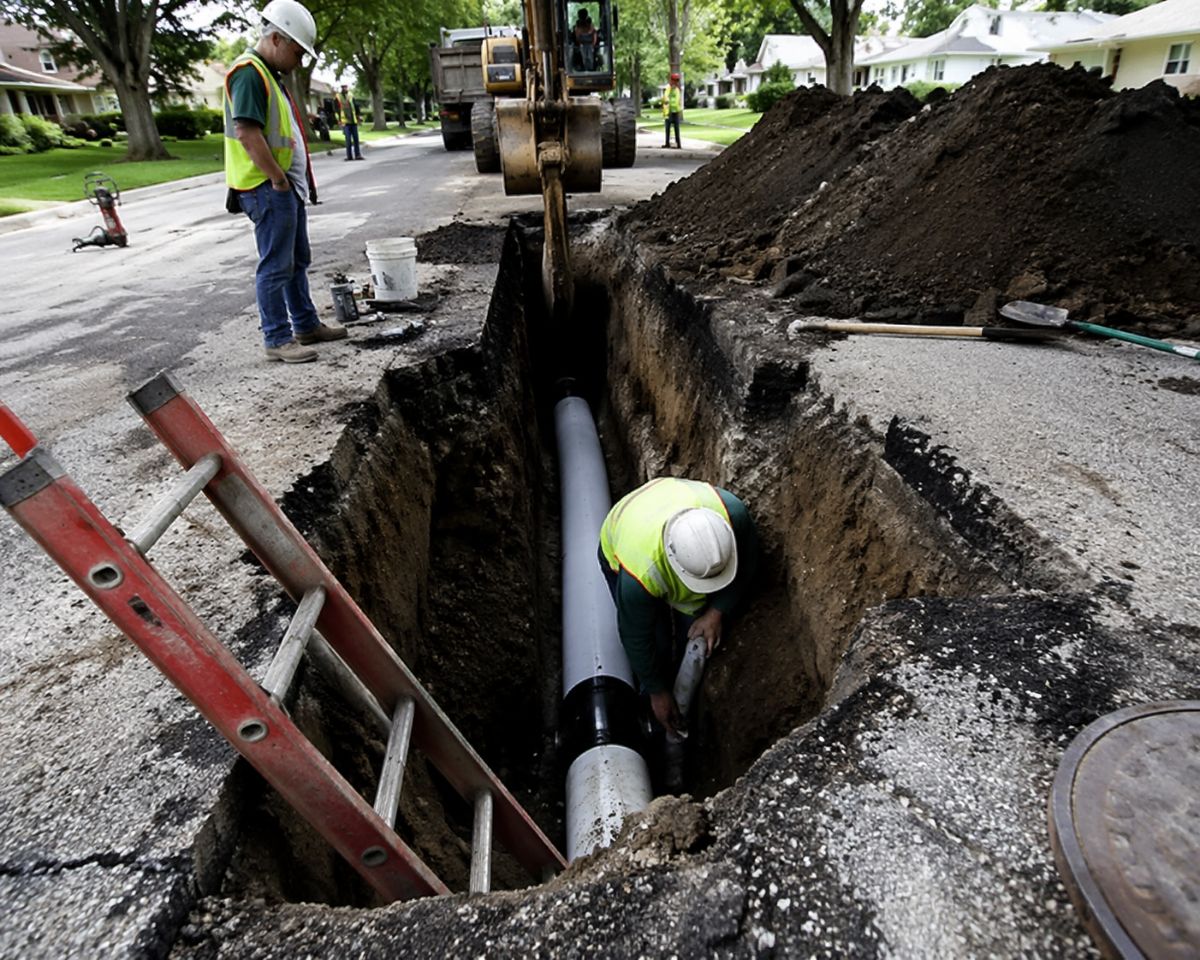
- Open-trench replacement: Traditional method—excavate the full run, install new pipe, and restore the surface. Best when a full rebuild is needed.
- Pipe bursting (trenchless replacement): A new pipe is pulled through the old one while fracturing the old pipe outward. Less surface disruption than open trenching and often used under driveways or landscaping.
Cost factors and timeline
Costs depend on pipe length, depth, material, access, local permitting, restoration needs (driveway, landscaping), and method chosen. Spot repairs are typically the least expensive. Trenchless lining or pipe bursting is often mid-range — more than a simple repair, but less than open trenching when factoring landscape or driveway restoration. Open-trench replacement can be the most expensive due to wide excavation and restoration work, but it provides a long-term solution for severely damaged systems.
Timelines vary: a camera inspection and diagnosis often take a few hours. Spot repairs can be completed in one day; trenchless jobs often finish in a day or two. Full replacements may take several days to a week depending on site conditions and restoration work. Shamrock gives clear timelines and straight forward pricing with no surprises.
Permits, inspections, and restoration
Municipal permits and final inspections may be required for any repair or replacement that connects to public sewer or alters a water line. After work is complete, the line is pressure tested or video verified and the site is restored. Shamrock coordinates inspections and restores disturbed areas as close to original condition as practical.
How to decide: repair or replace?
- If the issue is isolated, and the pipe is generally sound: repair or trenchless lining is often the smart, cost-effective choice.
- If the pipe has multiple defects, repeated failures, large collapses, or is at the end of its expected life: replacement provides long-term reliability and often lowers lifetime cost.
- Consider property disruption: trenchless options reduce landscape and driveway damage; open-trench gives a clean, permanent fix but with more short-term disruption.
Preventing future problems
To reduce risk after repair or replacement: maintain trees and root barriers, avoid flushing grease and non-degradable items, schedule periodic camera inspections, and correct yard grading that pools water near utility lines.
Choosing the right approach is technical but not mysterious. With accurate diagnosis and clear options, you can weigh cost, disruption, and long-term value to make the best decision for your property.
Conclusion
Repair can be the fastest, least disruptive fix when damage is limited. Replacement is the right call when damage is extensive, recurring, or the pipe is failing. The key is an honest diagnosis and straightforward plan so you won’t face repeat problems or surprise costs.
Don’t let sewer trouble linger. Call Shamrock Construction & Excavating for a camera inspection, clear options, and straight forward pricing. Get a free estimate and fast, professional service. Call us today or contact us online to schedule your inspection.