July 27, 2026 · Shamrock Construction & Excavation
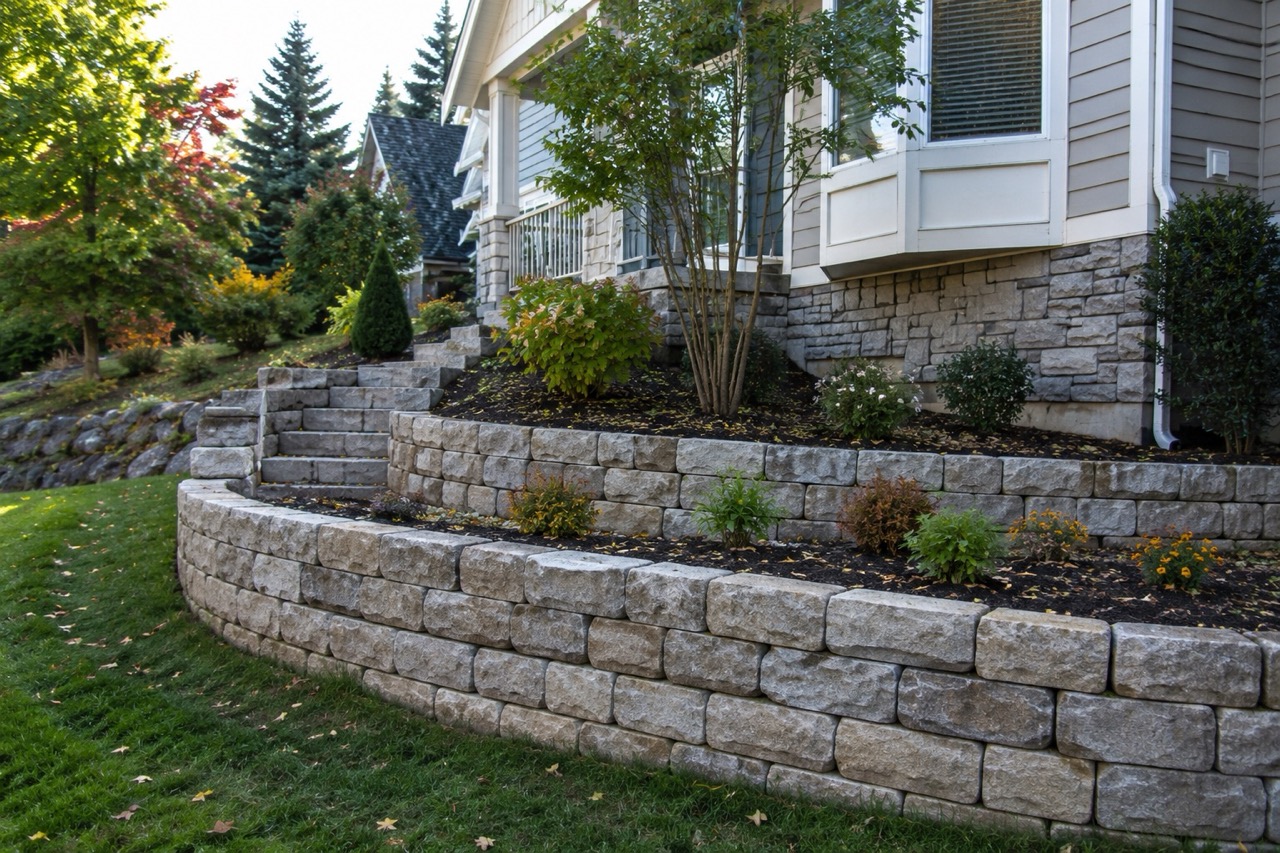
Sloped properties concentrate surface runoff. In the Treasure Valley, local conditions, mixed soils, seasonal irrigation, freeze and thaw cycles and heavy spring runoff complicate water management. Concentrated flow can erode topsoil, saturate foundations, damage drain fields and create soggy low spots. Here is how to manage it.
Key Terms
- Surface runoff: water flowing over land when soil absorption lags
- French drain (curtain drain): perforated pipe in a gravel trench that collects and redirects groundwater
- Swale: a shallow, vegetated channel that slows and directs stormwater
- Slope stabilization: retaining walls, terraces and vegetation that reduce erosion
Practical Drainage Fixes for Slopes
1. Regrading and Terracing
A gentle grade away from the foundation, at minimum 6 inches over 10 feet where possible, prevents pooling. Terracing breaks long slopes into manageable runs.
2. Swales and Vegetated Channels
Low-cost and effective, using native grasses with check dams or riprap at points where flow concentrates.
3. French Drains and Subsurface Collection
French drains intercept and route water to a safe outlet: a storm sewer, dry well or detention area. They work behind retaining walls and below driveways, and sump pits provide controlled discharge on low sites.
4. Retaining Walls and Terracing
Retaining walls reduce slope angle, protect foundations and create usable flat areas. Subdrains behind walls prevent hydrostatic pressure buildup that can crack or tip a wall.
5. Erosion Control
Use erosion control blankets, hydroseed or jute netting on newly graded banks. Established vegetation is the long-term defense.
6. Stormwater Detention and Infiltration
Detention basins, dry wells or infiltration trenches store water and release it slowly. Permeable pavers increase on-site infiltration.
7. Roof and Gutter Management
Properly sized gutters and downspout extensions keep roof runoff from carving up the slope below.
Site Assessment and Permitting
A good assessment covers slope percentages, soil type, existing drainage paths and utility locations. Some projects require permits, especially when connecting to municipal storm systems, altering hillside stability or working near drainage easements. We handle that coordination.
Maintenance and Long-Term Care
- Inspect drains and catch basins seasonally
- Keep gutters clear and downspouts directed away from foundations
- Monitor vegetation and reseed bare areas promptly
- Flush French drains if flow rates drop
When to Call a Professional
Repeating wet spots, foundation seepage, active erosion or a failing drain field mean it is time. Complex slopes require equipment, permits and experience. Costs vary with soil, slope, strategy and materials: simple fixes cost little, comprehensive systems solve chronic problems for good.
Benefits of Fixing Drainage Right
- Protects foundations and basements
- Preserves landscaping and prevents erosion
- Improves usable yard space
- Reduces risk to septic and sewer systems
Conclusion
Sloped lots in the Treasure Valley demand thoughtful, site-specific drainage plans. Shamrock Construction & Excavation designs and builds drainage systems in Boise matched to your slope, soil and water patterns. Call (208) 919-4260 for an on-site assessment and free estimate.