May 4, 2026 · Shamrock Construction & Excavation
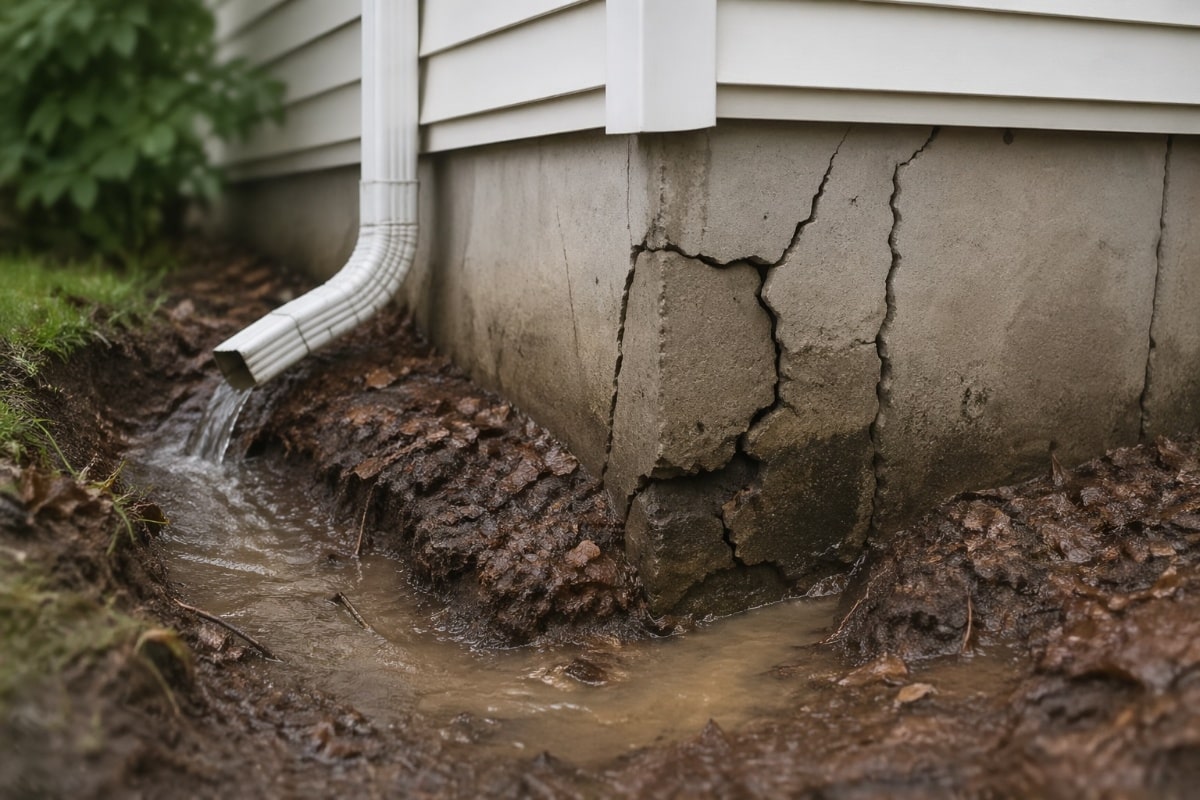
Why drainage matters to your foundation
Water is one of the most common threats to a house’s foundation. When surface runoff or groundwater isn’t directed away from the structure, soil around the footings becomes saturated. Saturated soil transfers extra pressure to the foundation (hydrostatic pressure), causes clay-rich soils to expand and contract, and can wash away the supporting material beneath footings. Over time these forces produce foundation settlement, cracking, and leaking basements—problems that are costly and disruptive if left unaddressed.
How poor drainage damages foundations
- Hydrostatic pressure: Water-soaked soil exerts lateral force against foundation walls, pushing them inward and opening cracks or bowing walls.
- Soil expansion and contraction: Clay and silt soils swell when wet and shrink when dry. Repeated cycles cause foundation movement, gaps in masonry, and uneven floors.
- Erosion and undermining: Surface runoff or concentrated flow can erode soil around footings, removing support and causing settlement or tilting.
- Frost heave and freeze/thaw: In regions with cold winters, water in the soil freezes and expands, lifting slabs or causing differential movement that damages walls and foundations.
- Basement leaks and mold: Cracks and gaps let water into basements and crawlspaces, promoting mold, rot, and indoor air quality problems that affect health and resale value.
Common causes of poor drainage
Identifying the source of a drainage problem is the first step to a lasting repair. Typical causes include:
- Negative grading: Soil that slopes toward the house instead of away funnels water to the foundation.
- Improper downspouts: Short or clogged downspouts dump roof runoff next to foundations instead of into a safe discharge area.
- Compacted soil and impermeable surfaces: Heavy foot traffic, construction compaction, or large paved areas reduce infiltration and increase surface runoff.
- Clogged or missing perimeter drains: A missing French drain or blocked foundation drain allows groundwater to build up against walls.
- High water table and irrigation leaks: Poorly directed irrigation, leaking water lines, or high seasonal groundwater raise soil moisture near footings.
Warning signs to watch for
Catch problems early. Watch for:
- Exterior: persistent soggy or sinking spots near the foundation, pooled water after storms, or erosion channels.
- Interior: basement seepage, musty odors, efflorescence (white salt stains), stair-step cracks in brick or concrete, and doors or windows that stick.
- Structural: diagonal cracks, gaps between walls and floors, sloping or uneven floors, and visible foundation movement.
Practical fixes and long-term solutions
Solutions range from simple homeowner fixes to professional drainage systems. Use the right method for the cause and site conditions.
DIY and maintenance steps
- Extend downspouts at least 6–10 feet away from the foundation or tie into a safe drainage line.
- Regrade soil to slope away from the house (minimum 5% slope for the first 10 feet is a common recommendation).
- Keep gutters clean so roof runoff is handled predictably.
- Avoid planting large trees close to the foundation; roots cause both moisture changes and direct damage.
Professional drainage repairs
For persistent or structural problems, hire an experienced contractor to install:
- French drains (perimeter drains): Subsurface gravel-filled trenches with a perforated pipe that moves groundwater away from foundations.
- Sump pits and pumps: Collected water is pumped out to an approved discharge location—useful where the water table is high.
- Catch basins and surface drains: For concentrated runoff from driveways or low spots, these systems funnel water into pipes or storm drains.
- Foundation sealants and interior drainage: Interior drainage channels and waterproofing membranes address leaks and protect finished basements.
Why professional diagnosis matters
Drainage failures often have multiple contributing factors. A professional inspection—using slope analysis, soil assessment, and in some cases camera or moisture testing—ensures repairs target the cause, not just the symptom. In Idaho and Canyon County, local conditions like freeze/thaw cycles, irrigation systems, and mixed soils affect the best long-term solution.
When to call a contractor
If you see structural cracks, recurring basement water, or yard settlement, call a licensed excavation and drainage specialist. Quick action limits damage and can save thousands versus waiting until a foundation repair is unavoidable. Choose a contractor who offers clear communication, an inspection-based plan, and predictable pricing.
Conclusion
Poor drainage is one of the leading, preventable causes of foundation damage. Simple maintenance—clean gutters, extend downspouts, and proper grading—helps a lot. For persistent moisture, structural warning signs, or complex site conditions, professional drainage systems like French drains, sump pumps, and regrading are the right move to protect your home and investment.
Don’t wait for small leaks to become major repairs. Contact Shamrock Construction & Excavating for a clear, no-nonsense inspection and a practical plan. Contact Us today or call to get a free estimate and fast, reliable drainage solutions.