June 1, 2026 · Shamrock Construction & Excavation
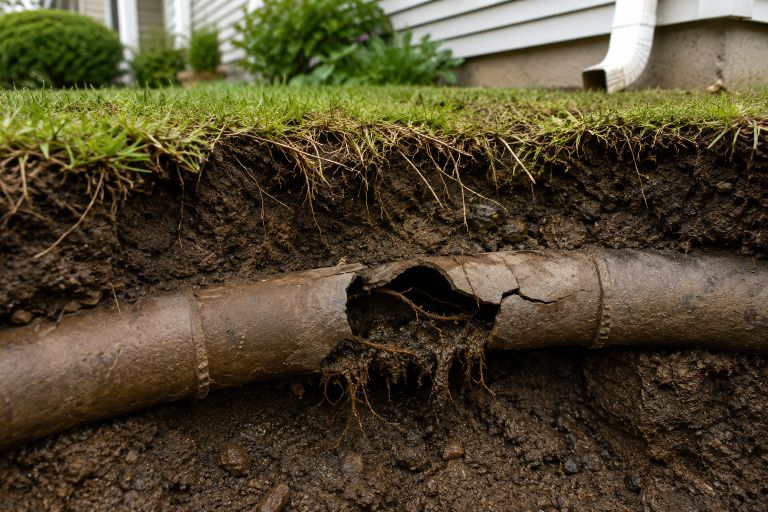
Why a failing sewer line needs fast attention
A damaged sewer line threatens your home, yard, and health. Left unchecked, small clogs or leaks can escalate into backups, contaminated soil, or a collapsed line that requires full replacement. Early diagnosis with tools like video sewer inspection lets you choose the least disruptive, most cost-effective repair—often trenchless methods—before the problem gets worse.
7 signs your sewer line needs repair or replacement
- Slow drains throughout the house: If sinks, tubs, and floor drains all slow at once, the issue is likely in the main sewer line, not an individual trap. Multiple slow fixtures suggest a partial blockage or buildup in the main pipe. Act quickly before it becomes a full backup.
- Toilet gurgling or bubbling: Gurgling toilets or bubbling in sinks often indicate trapped air as water struggles to pass a partial obstruction. This is a common early symptom of root intrusion, grease accumulation, or collapsed pipe sections.
- Recurring clogs and backups: Frequent clogs that professional snaking won’t permanently fix usually point to a deeper line problem. Tree roots, broken joints, or heavy mineral buildup can cause repeat blockages that require camera diagnosis and targeted repair.
- Foul sewage odors inside or outside: Persistent sewer smells near drains or in the yard suggest a leaking or broken sewer line. Gas and sewer effluent can escape through cracks or misaligned joints, posing a health risk and signaling the need for immediate inspection.
- Wet or soggy spots in the yard: A localized wet area, lush patches of grass, or a sinking spot in your yard can mean sewer leakage under the soil. Standing moisture near the house foundation is especially urgent. Repairing the line can prevent structural and environmental damage.
- Unusual lawn growth or sinkholes: Excessively healthy grass or plants over a line is often fed by warm, nutrient-rich wastewater. Over time, soil washout can form depressions, exposed pipe, or sinkholes. These are signs of significant leakage or collapse requiring excavation or trenchless replacement.
- Age and material of the sewer line: Older pipes—cast iron, clay, or early PVC—are more likely to fail from corrosion, root intrusion, or ground movement. Even without obvious symptoms, lines past their expected lifespan should be inspected, especially before a home sale or major landscaping work.
Common causes and diagnostic tools
Root intrusion is one of the most common causes. Roots exploit small cracks and spread, trapping solids and causing recurring clogs. Other causes include freeze/thaw damage, ground shifting, poor original installation, mineral buildup, and objects flushed into the system.
Professional diagnosis often starts with a video sewer inspection (sewer camera). Video lets technicians pinpoint the problem location and severity without guesswork. Additional detection methods include smoke testing, hydrostatic testing, and electronic locating of sewer line runs.
Repair options: spot repair, trenchless, or replacement
Once the problem is identified, repair choices depend on pipe condition, location, and long-term goals:
- Spot repair: Fixes a short damaged section. Least invasive when the remaining pipe is sound.
- Trenchless lining (cured-in-place pipe): A liner seals the existing pipe from the inside. Good when the pipe is continuous but leaking or partially collapsed.
- Pipe bursting / trenchless replacement: Replaces the old pipe with new pipe without a continuous open trench. Useful when full replacement is needed but surface disruption must be minimized.
- Open-cut replacement: Traditional excavation and replace. Sometimes necessary for severe collapse, large diameter lines, or when other utilities or site conditions prevent trenchless methods.
When to call a pro
If you spot any of the warning signs—especially sewage odors, wet yard spots, or multiple slow drains—call a licensed sewer contractor for inspection immediately. Quick action can avoid emergency backups, foundation issues, and large repair bills down the road.
Local conditions that matter
In Idaho and the surrounding Canyon County area, freeze/thaw cycles, irrigation practices, and mixed soil types increase the risk of sewer damage and ground movement. Local experience matters: contractors who understand these conditions can recommend solutions that last.
What to expect from Shamrock Construction & Excavation
Shamrock Construction & Excavation offers video inspection, clear diagnosis, and straightforward repair options (trenchless and open-cut) backed by decades of experience. We prioritize minimal disruption, clear pricing, and a plan that prevents repeat problems.
Conclusion
Recognizing the seven warning signs—slow drains, gurgling fixtures, recurring clogs, sewer smells, soggy or unusual lawn areas, sinkholes, and aging pipes—lets you act before a small problem becomes a major failure. Accurate diagnosis with video inspection is the key to choosing the right repair and protecting your home.
Don’t wait for a sewer emergency. Call Shamrock Construction & Excavation today for a sewer camera inspection, honest diagnosis, and a clear repair plan. Get a free estimate now and let us handle the repair or replacement with no surprises.